I presented this paper to the "Symposium on Cultural Affairs Concerning Classical Culture" in Askhabad, Turkmenistan, in October of 2000. Along with other rug scholars from many other countries, I was there at the invitation of Turkman Bashii, the supreme ruler of Turkmenistan. We were invited to travel to Turkmenistan to help their "scholars" ascertain the true nature of the classical Turkoman culture. The government had realized their Turkoman cultural experience had been obscured through over 100 years of Russian control. The following paper was delivered to a small select group of Turkmenistan's most learned rug scholars along with Elena Tsareva and the attending German collectors. It was a most enjoyable experience and I hope you enjoy reading it.
Perspective in Classical Turkoman Weaving
The earliest mention of the people called the Turkomen came in about the 7th century. We have no physical evidence of classical Turkoman iconography. The supposition that the Turkomen wove at all during this period is based mainly on the quality of their later work. I believe that the people we call the Turkomen had been around for a long time and had been weaving during the 7th century,C.E. If the inspiration for early Turkoman iconography came from Chinese roundels, badges of rank, as Robert Pinner has hypothesized, then it is fairly reasonable to imagine that these earliest Turkoman rugs were composed of rows and columns of octagonal shaped "gulls." This makes a lot of sense to me. The Chinese roundels indicated the status of the persons who wore them. The roundels themselves were thought to possess intrinsic power. The Turkoman thought much like the Navajo did in the American Southwest. The Navajo would always remove the badges of rank from fallen "commanders", and these were affixed to the outfits worn by the Navajo to increase their personal power. They believed the badges themselves conferred the powers of authority to any person wearing them. This command based upon proper attire and "badges of rank" suited the Indian mind and they immediately adopted them for their "power". I suggest that the 7th century Turkomen, having fled the Chinese and then migrating from Northern China to the Western environs of the Caspian sea, would have sought to transfer the power of these badges of rank, or "roundels", onto their main carpets, as talisman of great power. The Turkomen compared themselves to each other by comparing one another's lineage back to their respective "great ancestor." This internal and invisible transference of power is a salient feature of their classical culture. To take the badges of rank from a superior force and weave them, in a sense, into their own personal history as part of their weavings is perfectly logical. I have assumed that the circular shape of Chinese embroidered roundels would have been interpreted by the Turkomen as octagonal shapes in the square matrix of their pile weaving. I speculate that the earliest Turkoman weavings were most likely knotted at around 36 knots per square inch. I believe this because in the earliest times it can be assumed that the population was thin and time would have been of the essence. These conditions might well have remained that way for centuries and this hypothetical loose weave could account for their complete absence in the historical record. The prototypical Turkoman had a visual perception whose neurological machinery was genetically tuned to his environment, the Asian Steppes. It isn't a well-known fact but Pygmies in the deepest Congo, who have not ventured out of the great Ituri Forest for some hundred generations, simply do not have far field perceptions; see Colin Greenwood, THE FOREST PEOPLE. The furthermost distance any classical Pygmy ever experienced visually, over thousands of years of development, was approximately 300 feet. To their mind every object in existence must have been understood within a 300-foot context. Their near field understanding also included the Moon, which they immortalized in many songs and dances as an intimate lover and consort, how beautiful and laudatory! The salient fact here is simply that Pygmies, in the classical sense, did not have what we non-forest dwelling people experience as "far field perception." The classical Turkoman rode horse-mounted over the undulating steppes of Central Asia. They had a great biological imperatives to not only see into the far Field, or fresnel-zone, but to do so with the maximum clarity possible. Far-field visual clarity is defined as the ability to resolve two closely spaced dots or lines into separate entities on the horizon. Here the biological imperative was supplied by the survival value imparted to any Turkoman able to distinguish a bush from a man or one man, on the horizon, from a raiding party. Let me add that Edmond O'Donovan ( more on him later) wrote at length about the Turkoman's uncanny ability to estimate distance and identify objects across the vastness of the undulating Asian Steppe. He noted that their guesses, concerning distance related subjects, was far superior to his own estimates using mathematics and a quality pocket-watch, with a sweep second hand! Most literate Westerners have perceptions that are genetically, neurologically, "formed and informed" by the elements of an unnatural landscape, the words (atoms) of their internal worlds, their logos; see the writings of Marshall MacLuhan. The literate mind, your consciousness, is in an evolutionary relationship with the structures of those modern "reality-mirroring" languages that it embraces. Americans are "English" in a way they can never escape, as long as they speak a language identified by them as English. The most important thing in the world for my son to do was to make supreme sense out of tiny black dots on white sheets of paper, the elements of our mutual English world!
Let's look at a hypothetical example:
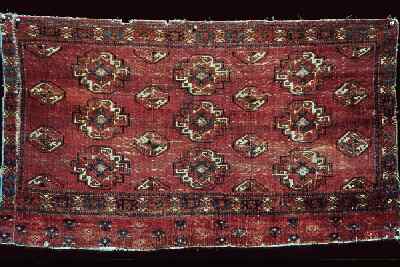
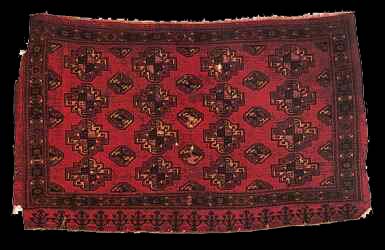
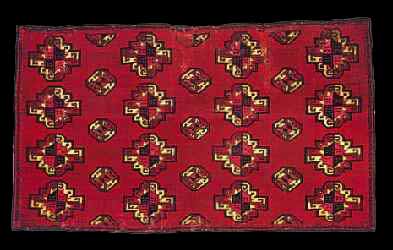
If one plucked a Pygmy, a Turkoman, and a French Monk from their traditional environments, then took them to a novel environment, say Alaska, for a full day and night, one would find few if any points of agreement concerning their impressions of the trip upon their respective returns. Three different people returning to three different environments would relate three different versions of the same "reality." The simple yet seldom appreciated fact is that people DO NOT see the world the same way because people do not live in the same environments. I was well enough educated that when presented with paradigm breaking News, I don't let that news out of my mind until I achieve some satisfactory closure. In this case that took quite a while with some lucky coincidences thrown in. Edmond O'Donovan, THE MERV OASIS,1882, (henceforth identified only as ED) made a well studied observation of a peculiar weakness the Turkoman showed in understanding the "object of representation" in a certain class of lineographic newspaper illustrations popular in the newspaper world of 1882. Lineographic newspaper illustrations were built up of closely packed lines carved into the substance of a printing block. The lines later picked up the ink and were thus rendered black while the spaces in relief were left ink free or white in the final "picture". ED was a high functioning secret service agent in the service of the "Queen" of England. The simple fact that ED was in the service of a Queen made him a priori simpatico with the matriarchal Turkomen, a fact he seemingly never realized. ED made meticulous notes concerning every detail of the Turkoman experience of life and from reading his great tome, The Merv Oasis, one can deduce much about their peculiar, alien, experience of life. He noted the great deal of insight they showed concerning any plan or map of a territory, when drawn in sand or even when written on paper. One can conclude that the Turkomen had no difficulty at all seeing complex or three dimensional concepts represented in the two dimensional context of a map. A map is a lot like the cartoon of a weaving and those most salient and culturally important maps were always memorized, never written down. Obviously the Turkomen had powerful memories and this shared common memory was the corner stone of their society, much like English is the cornerstone of our own culture. The paradigm breaking observation made by ED was that Turkomen were essentially blind to the visual information encoded in late 19th century lineographic newspaper illustrations so readily available to literate English speaking people. ED had newspapers sent to him regularly, he was ostensibly a newspaperman, and he was very well respected by the Turkoman who made him a Khan, though technically he was also their prisoner. In one of O'Donovan's newspapers there was a full page lineographic illustration of a British Officer returning home to England from the Afghan Wars. There were young girls dancing about him disseminating garlands of flowers. ED put this large illustration squarely before three sedars, wise men, and timed their observations. Using a high quality pocket-watch he observed these three Turkomen study that picture for 45 minutes. At about that time one of the wise men stabbed his finger at the buckle on the Colonel's belt, and exclaimed "buluk!, Buluk!" Buluk means fish, whatever was the man seeing? ED presented that picture for a political reason, the image of a victorious British Officer was a significant political reality. He was hoping to improve his immediate position via his relationship to the Queen Mother, ruler of England. The complete and absolute failure of these three intelligent Turkomen to perceive even one visual detail in common with ED was extremely baffling. He hypothesized that these Turkomen were struck, as if in a state of reverie, considering the negative spaces, those broken shards of glass making up the spaces between the closely packed lines of the illustration, instead of the sum total visual impact of all those lines. How similar the two processes! In both cases, reading and seeing lineographic pictures requires visual persistence, the suspension of "understanding" until enough information is gathered by the individual. Could seeing those newspaper illustrations have been partially dependant upon one's ability to read, to make sense out of chaos ? He further speculated that they were, like us, when looking at a captivating pattern of wallpaper. Sometimes our attention is captivated by the negative patterns formed of "objects" in the literate mind. He was absolutely correct. Desert adapted horse mounted Turkoman nomads, over countless generations, developed visual habits of interpretation , which rendered them completely blind to the literate object in any Western newspaper lineographic illustration. Tens years of reflection on this simple yet profound observation made by ED has led me to the following conclusion. The heart and soul of Turkoman weaving, those masterpieces of the previous era, have gone somewhat undiscovered by current scholarship due to the complete failure of the Turkoman connoisseurs to distinguish classical examples from later examples, all disseminated en masse late in the 19th century. My point here is that resolving the perceptual paradox, observed by ED, via rational hypothesis and experiment, one can arrive at an understanding of the crucial pieces of information that unlock the mysteries of the classical Turkoman aesthetic. I did precisely this approximately ten years ago and wrote what has turned out to be one of the pivotal articles concerning classical Turkoman design. Using my contacts in the American scientific community I got time on Americas biggest super computer to completely analyze the three-dimensionality quotient for a group of related chuval gulled Turkoman chuvals. For the purposes of this paper classical Turkoman weaving is defined as weaving prior to 1750 AD. Through my research I have discovered a classical era Turkoman chuval, a late classical Turkoman chuval, and by application of the theory, an early classical Turkoman chuval. Many years ago, when I published my first ideas on Turkoman aesthetic in Hali magazine, No. 55, I noticed that the outlines of major design elements, like major and minor gulls, on very old Turkomen were invariably and noticeably asymmetric. Considering the extremely fine wool and very high knot counts we were encountering it seemed logical that this "asymmetry" was meaningful in some basic way. It turns out that by varying the density of dark outlines and by distorting gently the outlines of certain design elements, Turkomen of old produced designs whose elements floated against a sea of blood or actually seemed to take off like a flock of birds against a blood red sky. They also liked a strong purple color for the background. A perfectly symmetrical design can achieve a deep interplay between adjacent design elements but can never indicate to an observer that the composition is three-dimensional. In an effort to make her gulls seem to fly, the classical Turkoman weaver varied her line density by over-dyeing and/or over-packing the pile threads. When weavers combine the control of line density with a highly directed distortion of design outlines, they can make "objects" seem to float suspended in space and thus occupy volume. The hallmark of archaic Turkoman design is the mastery of three-dimensional illusion produced by the precise drawing of design elements in tension with the color, shade, saturation, and amount of open field. "Realizing" this illusion creates feelings of depth and movement, and towards this end designs are distorted and outline qualities are varied. The resulting positive synthesis between perception and understanding defines thearchetypal nomadic Turkoman weaving.
One who is familiar with drafting knows that the most advanced techniques are employed to make a two dimensional drawing appear three-dimensional. In the simplest case this can be done with a visual trick, a technique to fool the eye and mislead the mind. The mastery of these techniques is tribally specific, with the Salor using shape distortion and variations in color tension to produce the perception of deep space. The Tekke, of the same 17th century period, were using variations in line thickness and density, in conjunction with a much more subtle palette, to produce equivalent results.
Microscopic analysis of classical Turkoman weaving, done at the Metropolitan museum of Art in New York City under the direction of Nobiko Kajitani, have indicated the absolute control Turkoman weavers had of their medium. This fact convinced us to look for mathematical support for our hypothesis.
The mathematics were done by Dr. Craig Carriere. The calculations utilized in this research involve the transcription of the geometric design elements of the major and minor gulls into partial differential equations from which computer-generated images of the gulls can be produced. The coupled partial differential equations used to generate the gulls are then solved to yield local scaling fractal sets from which the major repeat pattern of the chuval field can be generated. One of the main parameters developed in the solution of the coupled partial differential equations, and of paramount importance for the stability of the solution, is the overall dimensionality of the field. All the calculations discussed in this work were performed on a Silicon Graphics Indigo II workstation. The calculations introduce a quantitative methodology to assess directly the changes in the three-dimensional character of early Turkoman chuvals with the chuval gull. The degradation of dimensionality in these chuvals is very predictive for the age of this particular type of weaving. No such linear relationship for the degradation of other Turkoman designs is implied.
The Salor represented the largest and most powerful Turkoman tribe in the sixteenth century, dominating the steppes of western Turkmenistan. Their ultimate decline came in the eighteenth century when the Yomud achieved dominance. The founding of a non-traditional Turkoman tribe brought to an end the development of a sophisticated three-dimensional aesthetic. In order to establish a timeline it has been necessary to identify Turkoman chuvals with high dimensionality quotients and subject them to the most rigorous scientific dating available. After consulting Nobiku Kajitani, Curator of Textiles at the Metropolitan Museum of Art in New York City, we used her careful analysis of dyes to help choose a small selection of known and unknown dated textiles to submit to Dr Anthony Jull, Research Scientist at the University of Arizona. Dr. Jull stated that he was confident that if we found a Turkoman earlier than 1700 he could date it accurately.
His accuracy was surprising. For instance, we submitted an unidentified fragment from one of the Ardabil carpets and got a date whose median was in the range of the inscribed date on the carpet. We also submitted four Turkomans for dating, including two chuval gulled chuvals and two other Turkomans thought by experts to be of significant age. One of the chuvals with chuval gulls was dated to a mean age of 1650, and a sample from this textile was run again positively showing that it was indeed mid-seventeenth century. The second chuval tested with a chuval gull was thought by Dr. Jull to be early 18th century. Both these chuvals are commented on below. Once we had established a benchmark, degradation of the dimensionality quotient of the field composition as evidenced by a loss of three dimensionality could be used to interpolate or extrapolate the age of other weavings with the same or very similar design.